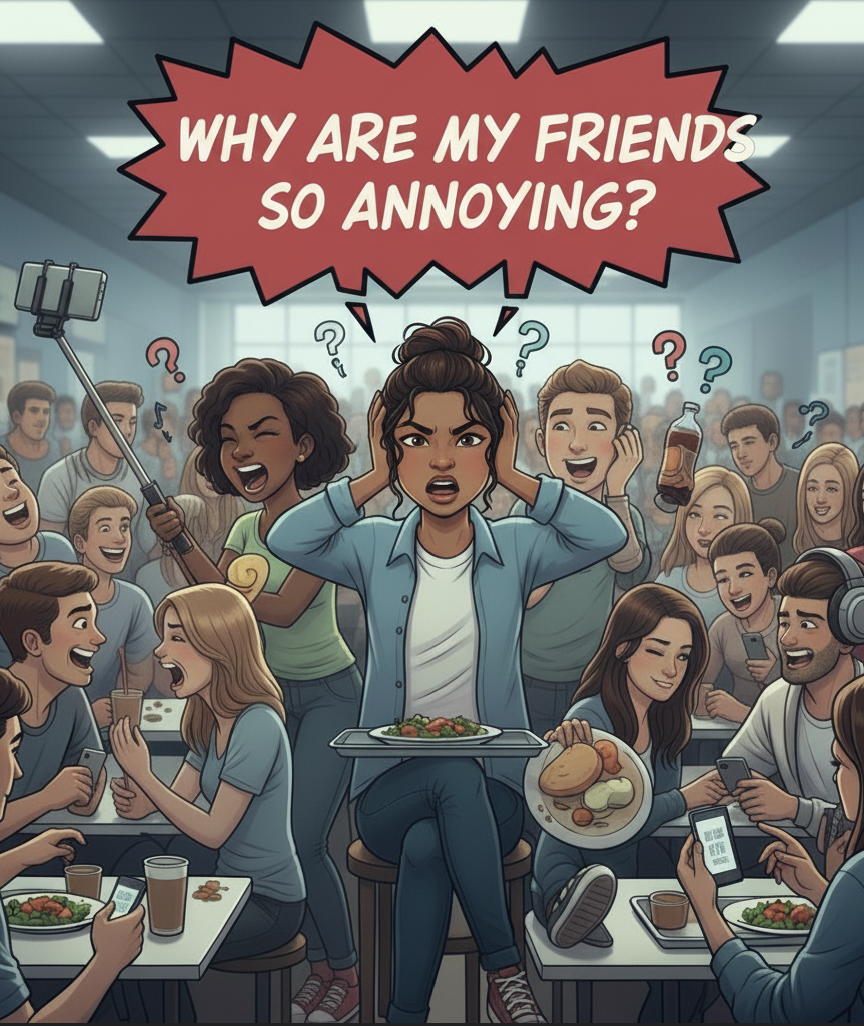
Okay, let's talk about your friend. The one who's always late. Or constantly interrupts you. Or cancels plans last minute. You know the internal monologue that starts playing on a loop: "They don't respect me." "They think their time is more important than mine." You can't help but feel like their actions are a direct comment on your friendship.
But what if that's not what's really happening?
Your Brain's Default Setting is "Me, Me, Me"
Let's get one thing straight: your brain has a default setting, and it's stuck on 'Me, Me, Me.' This isn't a personal flaw—it's a neurological shortcut called "self-referential thinking." Instead of asking what's going on with them, your brain's first question is always, "What does this say about ME?"
When someone's annoying, it doesn't ask "Why are they like that?" It asks "Why are they doing this to ME?"
It's a Habit, Not a Hit Job
Here's the hard truth: that annoying thing your friend does is almost certainly not a special performance just for you. They're like this with everyone.
Think about it. Do they only do this to you? Or do they do it to:
- Their mum?
- Their other friends?
- Literally everyone?
You're making yourself the main character in their habit drama, but you're not even in the cast.
The Plot Twist: They're Not Thinking About You at All
Okay, so you get that it's their habit, not about you. But here's the plot twist that changes everything: while you're busy feeling ignored, they're not even thinking about you. They're obsessing over themselves.
That's right. While you're stewing over their lateness, they're probably stuck in their own head, spiraling with thoughts that you think they're a total mess.
While you're thinking their lateness means they don't respect you, they're probably worried YOU think they're a mess. Everyone's making it about themselves. It's about neither of you.
So, What Now? From Annoyed to Unbothered
Look, just because you understand this doesn't mean their habits magically stop being annoying. You're still allowed to be frustrated waiting 40 minutes in the cold for them.
The goal isn't to stop feeling annoyed. It's to separate that annoyance from taking it personally. This stops the frustration from turning into the kind of deep resentment that ruins your day and corrodes your friendship.
In the Mesmer app, we have a simple exercise that walks you through exactly how to catch these thoughts and stop taking a friend's habits personally, so their habits stay theirs, and your energy stays yours.
Reclaim Your Energy
When you stop making a friend's behavior about you, you break the cycle of resentment and reclaim your mental energy. Their habits become their responsibility, not a burden for you to carry.
What could you do with all the energy you'd save if you stopped taking everything so personally?